Category: Parents

  • Helping Young Athletes Stay Motivated When Progress Feels Slow

    Helping Young Athletes Stay Motivated When Progress Feels Slow

    For young athletes, progress can sometimes feel frustratingly slow. They may practice the same skill for weeks without seeing a dramatic improvement, lose a game they worked hard to prepare for, or watch teammates advance faster than they do. When results don’t match their effort, it’s easy for young athletes to wonder, “Am I actually getting better?”

    Coaches play an important role in helping athletes understand that development isn’t always obvious. Progress often happens gradually, through small improvements that may not show up on a scoreboard.

    Guide Athletes to Look Beyond the Results

    Wins, scores, rankings, and statistics can be useful measures of performance, but they don’t tell the whole story—especially for developing athletes.

    A young player may not score more goals yet, but they might be making better decisions, communicating more effectively, recovering faster after mistakes, or showing greater confidence during practice.

    Coaches can help athletes recognize these changes by asking questions such as:

    • What can you do now that you couldn’t do before?
    • What felt easier in today’s practice?
    • What did you learn from that game?
    • What is one thing you’d like to improve next?

    These conversations shift the focus from immediate results to continuous development.

    Celebrate the Small Wins

    When progress feels slow, small victories become especially important.

    Successfully completing a difficult drill, improving technique, staying focused through a challenging practice, or trying something new can all be meaningful signs of growth. Recognizing these moments helps young athletes see that their effort is producing results even if those results aren’t appearing on the scoreboard yet.

    Coaches and parents can reinforce this mindset by noticing and celebrating these small wins both during training and outside of competition. When young athletes hear consistent encouragement from the adults supporting them, they are more likely to recognize their own progress and stay motivated when improvement takes time.

    Celebrating small wins doesn’t mean lowering expectations. Instead, it helps athletes understand that big improvements are often built from many smaller ones.

    Teach Athletes That Development Isn’t Linear

    Young athletes can easily compare themselves to teammates or opponents who appear to be improving faster. Coaches can remind them that every athlete develops at a different pace.

    Some periods may bring rapid improvement, while others may feel like a plateau. A plateau doesn’t necessarily mean an athlete has stopped progressing. Sometimes skills are being reinforced before they become more consistent or automatic.

    Teaching athletes to expect these ups and downs can help them stay patient when progress isn’t immediately visible.

    Set Process-Based Goals

    Outcome goals, such as winning a tournament or scoring a certain number of points, can be motivating, but young athletes also benefit from goals they can directly control.

    Instead of focusing only on winning, coaches can encourage goals such as improving passing accuracy, communicating with teammates, maintaining proper technique, or making better decisions under pressure.

    Process-based goals give athletes something constructive to work toward during every practice and competition. They also make improvement easier to recognize.

    Make Effort Part of the Conversation

    Determination isn’t simply about working harder. For young athletes, it’s about learning how to respond when something is difficult.

    Coaches can reinforce qualities such as persistence, focus, curiosity, and willingness to learn. Praising these behaviors helps athletes understand that struggling with a skill doesn’t mean they’re failing, it means they’re still learning.

    Over time, this mindset can help young athletes become more comfortable with challenges and more confident in their ability to improve.

    Knowing When to Trust the Process

    Young athletes don’t always need to see immediate results to know they’re moving forward. They need coaches who can help them recognize the progress happening along the way.

    By looking beyond scores, celebrating small improvements, setting achievable process goals, and normalizing periods of slower development, coaches can help young athletes stay motivated and committed to their journey.

    Every athlete develops at a different pace. The goal isn’t to rush progress, it’s to create an environment where athletes can keep working, learning, and growing.

    Help Every Athlete Keep Moving Forward

    Ascend gives coaches the tools to create structured, development-focused training experiences that help athletes build skills over time. With training plans, drills, video coaching, and resources designed to support athlete development, coaches can make progress more visible and keep young athletes engaged throughout their journey.

    The most important thing young athletes can learn is that progress is not always something they can see right away. Every practice, challenge, mistake, and small breakthrough contributes to their development. When coaches help athletes appreciate those moments, they begin to understand that improvement isn’t about becoming better overnight. It’s about continuing to show up, learn, and take the next step. With patience and encouragement, slow progress can become a powerful lesson in determination.

  • Coach’s Toolkit: Reducing Group Chat Chaos with Digital Sports Coaching Tools

    Coach’s Toolkit: Reducing Group Chat Chaos with Digital Sports Coaching Tools

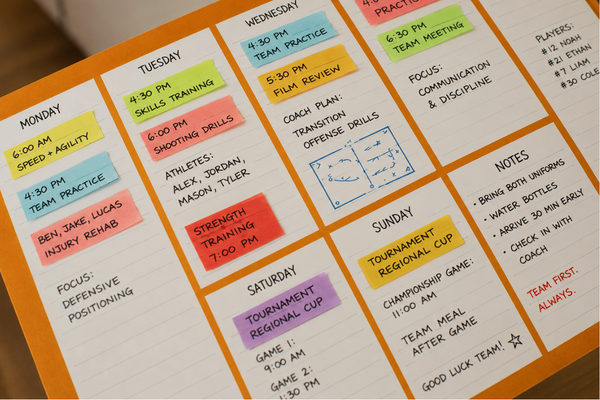
    For many youth sports teams, group chats have become the default way to communicate. Whether it’s a digital messenger, or mobile text messages, they seem like the quickest way to share practice reminders, schedule changes, and game-day updates.

    But as every coach and sports parent knows, what starts as a simple communication tool can quickly become overwhelming.

    Important announcements get buried beneath dozens of unrelated messages. Parents ask the same questions repeatedly because they missed earlier updates. Last-minute schedule changes create confusion, and coaches find themselves responding to individual messages late into the evening. Instead of saving time, group chats often create more work.

    As youth sports programs grow, communication needs become more complex. Coaches are expected to manage schedules, share resources, answer questions, coordinate volunteers, and keep parents informed—all while focusing on developing their athletes. Without the right tools, communication can easily become one of the biggest administrative challenges of coaching.

    Why Group Chats Become Chaotic

    Group messaging platforms are designed for conversation, not team management. Every new reply pushes important information further up the chat, making it difficult for parents to find what they need when they need it.

    Consider a typical week during the season:

    • A coach posts the practice schedule.
    • A parent asks about parking.
    • Another asks whether players should bring water bottles.
    • Someone shares photos from last weekend’s tournament.
    • A volunteer discusses snack assignments.

    Suddenly, the original schedule is buried under dozens of unrelated messages. By the time another parent checks the chat, they may miss key information entirely and ask a question that’s already been answered.

    Multiply this across multiple teams, tournaments, and busy family schedules, and communication quickly becomes fragmented.

    Centralizing Team Information

    Digital coaching platforms help solve this problem by giving coaches one central place to organize team information.

    Instead of searching through hundreds of chat messages, parents can access practice schedules, training plans, documents, announcements, and resources whenever they need them. Coaches update information once, and everyone sees the latest version.

    This reduces repetitive questions while giving families greater confidence that they’re working from accurate, up-to-date information.

    It also allows conversations to stay focused. Group chats can return to what they do best—quick discussions and community building—while important team information remains organized and easy to find.

    Better Communication Builds Trust

    Parents don’t expect constant updates—they simply want clear, reliable communication.

    When schedules are easy to access, expectations are clearly outlined, and resources are available in one location, uncertainty decreases. Parents spend less time chasing information, and coaches spend less time answering the same questions over and over.

    Clear communication also strengthens the relationship between coaches and families. Everyone understands practice objectives, athlete expectations, and upcoming events, creating a more collaborative environment centered on supporting young athletes.


    More Time for Coaching

    Administrative work is an unavoidable part of coaching, but it shouldn’t consume the majority of a coach’s time.

    Every minute spent scrolling through message threads or answering duplicate questions is time that could be invested in athlete development, practice planning, or building stronger relationships with players.

    Digital coaching tools streamline these routine tasks by organizing communication, reducing confusion, and making information readily available to everyone involved.

    The result is a smoother experience for coaches, parents, and athletes alike.


    Technology That Supports Development

    The best coaching technology doesn’t replace personal relationships, it strengthens them.

    When communication becomes more organized, coaches can focus on teaching, parents can better support their children, and athletes benefit from a more consistent and positive sporting experience.

    As youth sports continue to evolve, teams are discovering that successful coaching isn’t just about designing great practices. It’s also about creating systems that make communication simple, transparent, and accessible for everyone involved.

    Platforms like the Ascend Sports Coaching App are designed with this goal in mind, giving coaches a centralized space to manage schedules, share resources, organize training content, and keep families informed without relying solely on crowded group chats. By reducing communication clutter, coaches can spend less time managing messages and more time doing what matters most on the field.

  • Parents and Coaches: Building a Winning Partnership

    Parents and Coaches: Building a Winning Partnership

    Behind every young athlete is a team of supporters working toward the same goal. While coaches provide instruction and mentorship on the field, parents offer encouragement, stability, and motivation at home.

    When these two groups work together, young athletes benefit from a consistent, positive environment that supports both athletic and personal growth.

    Strong partnerships between parents and coaches are built on trust, communication, and shared expectations. They create an atmosphere where athletes feel supported rather than pulled in different directions, allowing them to focus on learning, developing new skills, and enjoying the sport they love.

    Putting the Athlete First

    The most successful parent-coach relationships begin with one simple principle: the athlete’s well-being comes first.

    Although parents and coaches may have different roles, they share a common objective which is to help young athletes grow in confidence, develop their abilities, and enjoy the experience of participating in sports.

    Keeping this shared purpose at the center of every conversation makes it easier to navigate challenges, whether it’s concerns about playing time, skill development, or competition schedules.

    When adults prioritize the athlete instead of personal expectations, decisions become more collaborative and productive.

    Building Trust Through Open Communication

    Trust doesn’t happen automatically. It develops through honest, respectful communication over time.

    Coaches should clearly communicate team expectations, practice schedules, goals, and coaching philosophies at the beginning of the season. Parents, in turn, can support this process by asking questions respectfully, sharing relevant information about their child, and addressing concerns privately rather than during games or practices.

    Regular communication helps prevent misunderstandings before they become larger issues. It also reassures families that coaches are invested in each athlete’s development and not just their performance during competition.

    Listening is just as important as speaking. When parents and coaches take the time to understand each other’s perspectives, they build stronger relationships based on mutual respect.

    Supporting Consistent Messages

    Young athletes benefit when the adults in their lives reinforce the same values.

    If coaches emphasize teamwork, resilience, and continuous improvement, parents can strengthen those lessons by encouraging similar attitudes at home. Instead of focusing solely on wins or statistics, conversations can celebrate effort, sportsmanship, personal growth, and learning from challenges.

    Consistency creates confidence. When athletes receive similar messages from both coaches and parents, they are less likely to feel confused or pressured by conflicting expectations.

    This unified approach helps children develop healthy habits that extend beyond sport.

    Respecting Each Role

    A successful partnership also requires understanding where each role begins and ends.

    Coaches bring technical expertise, plan practices, and make decisions that support the team’s overall development. Parents provide emotional support, encourage healthy routines, and help children maintain a positive perspective throughout the season.

    While it’s natural for parents to want the best for their child, avoiding the role of a “second coach” can reduce unnecessary pressure and confusion. Likewise, coaches who remain approachable and transparent create an environment where parents feel comfortable asking questions and supporting the team’s goals.

    Respect for each other’s responsibilities creates a stronger foundation for everyone involved.

    Technology Can Strengthen Communication

    As teams grow and schedules become busier, staying connected can become more challenging. Practice changes, tournament updates, training resources, and important announcements can easily become lost in email threads or group messages.

    Digital coaching platforms help simplify communication by providing one central place for coaches and families to stay informed. Parents can view schedules, receive team updates, access training resources, and better understand what athletes are working on throughout the season.

    This level of transparency helps reduce confusion while allowing parents to reinforce learning and preparation at home. Instead of wondering what comes next, families can stay connected to their child’s athletic journey with greater confidence.

    Trust that digital platforms like Ascend support this collaboration by helping coaches organize communication, share practice plans and development resources, and keep athletes and parents connected throughout the season—all within a single, easy-to-use platform.

    A Partnership That Lasts Beyond the Season

    The relationship between parents and coaches is about much more than managing practices or preparing for games. Together, they help shape the experiences that young athletes will remember long after the season ends.

    When trust, communication, and shared goals guide that partnership, athletes feel supported in every environment. They become more confident in taking on challenges, more resilient in the face of setbacks, and more likely to develop a lifelong love of sport.

    Winning games is always rewarding, but the strongest partnerships create something even more valuable: confident young people who know they have a team of adults working together to help them succeed. Both on and off the field.