Tag: digital training plans

  • From Coaching Binder to Digital Coaching Library — Part 2: Bring Your Resources Into the Digital World

    From Coaching Binder to Digital Coaching Library — Part 2: Bring Your Resources Into the Digital World

    How to Digitize Your Coaching Resources

    Once you’ve sorted through your coaching binder, the next step is moving your resources into a digital environment.

    It can be tempting to simply scan every page or take photos of your binder. But digitizing your coaching resources isn’t just about creating electronic copies of your paperwork.

    The goal is to turn your resources into content you can actually find, reuse, and adapt.

    1. Start With Your Most-Used Resources

    Don’t try to transfer everything at once.

    Start with the drills, practice plans, and resources you use most often. This gives you a useful digital library right away while allowing you to gradually transfer older materials.

    For example, start with:

    • Your top 10 drills
    • Your current practice plans
    • Your most-used skill activities
    • Resources for your current age group

    Once those are in place, you can build from there.

    2. Don’t Just Photograph the Page

    A photo of a paper drill is technically digital, but it doesn’t necessarily make the information easier to use.

    When possible, turn your resources into structured digital content.

    Instead of uploading a page that says:

    Passing Drill

    with several paragraphs of instructions, organize the information into sections such as:

    Objective: Improve passing accuracy
    Skill Level: Intermediate
    Duration: 15 minutes
    Equipment: Cones and balls
    Instructions: Step-by-step activity
    Coaching Points: What to watch for

    Now the resource is easier to understand and can potentially be reused in different practice plans.

    3. Use Tags and Categories

    One of the biggest advantages of digital resources is that you don’t have to remember exactly where something is stored.

    Use tags or categories to describe your resources.

    A single drill might be tagged:

    Passing | U15 | Intermediate | Skill Development | 15 minutes

    That gives you multiple ways to find it later.

    If you need a 15-minute activity for an intermediate U15 session, you can search based on those criteria instead of flipping through pages.

    4. Turn Practice Plans Into Reusable Resources

    Your practice plans don’t have to remain fixed documents.

    Look at each plan and identify the individual activities inside it.

    A single practice might include:

    Warm-Up → Passing Drill → Skill Development → Small-Sided Game

    Each activity can become its own reusable resource.

    That means you can take the same passing drill and use it in several different practice sessions without recreating it from scratch.

    5. Adapt Resources for Different Skill Levels

    A good activity may work for beginners, intermediate athletes, and advanced players—but the activity may need to change.

    Your digital resources can include variations.

    For example:

    Beginner: Reduce the distance and simplify the movement.

    Intermediate: Add movement and decision-making.

    Advanced: Add defenders, speed, or additional constraints.

    Instead of maintaining multiple paper copies, you can build variations into your digital resource and adapt it when needed.

    6. Build Your Digital Library Gradually

    Don’t worry about having a perfect digital library on day one.

    Think of it as a collection that grows over time.

    Every time you create a new drill, improve a practice plan, or discover a useful activity, add it to your library.

    Eventually, you’ll have something much more valuable than a digital copy of your binder: a collection of coaching resources that can be searched, adapted, and reused.

    7. Make Your Resources Work Harder

    The real benefit of digitizing your coaching resources isn’t simply having fewer papers to carry.

    It’s being able to find the right resource when you need it, adapt it for your athletes, and use it again in a different situation.

    Once your drills and practice plans are organized digitally, you can start building complete training sessions from those reusable resources.

    Next in the series: Beyond the Binder: Building a Digital Coaching System

  • From Coaching Binder to Digital Coaching Library — Part 1: Organize Before You Digitize

    From Coaching Binder to Digital Coaching Library — Part 1: Organize Before You Digitize

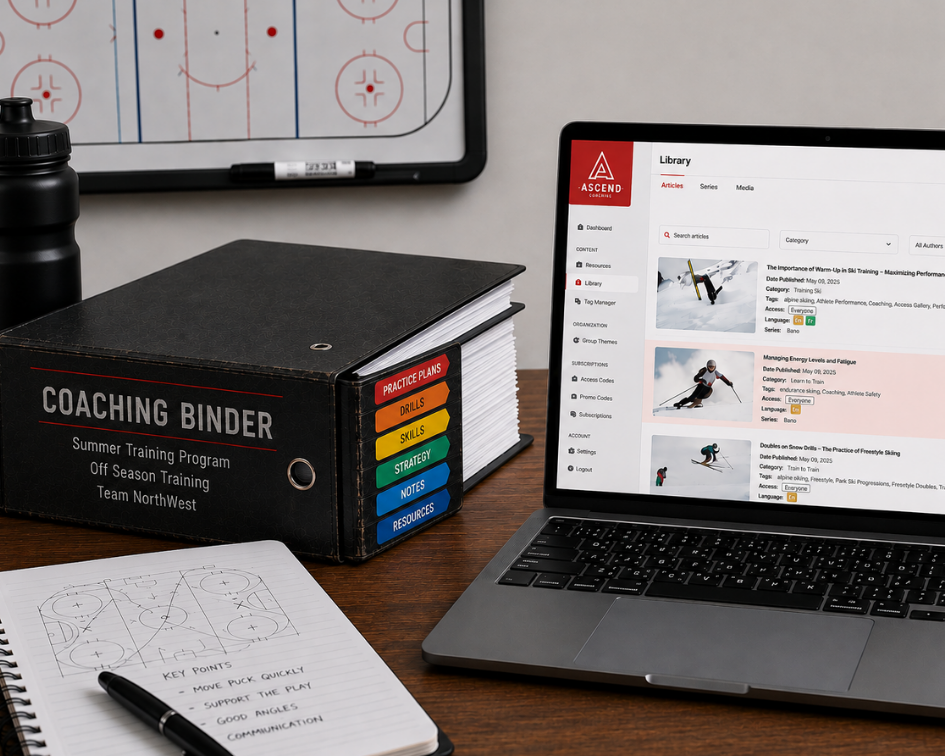
    For many coaches, the coaching binder is a record of years of experience. It might contain practice plans, drills, diagrams, notes from coaching clinics, athlete resources, and ideas you’ve collected along the way.

    But over time, that binder can become difficult to manage. Pages get buried, resources become outdated, and finding the right drill can mean flipping through dozens of pages.

    Moving your coaching resources to a digital app can make them easier to access and organize. But before you start uploading everything, take some time to decide what actually belongs in your digital coaching library.

    1. Start With an Inventory

    Go through your binder section by section and make a list of what you have.

    You might find:

    • Practice plans
    • Drills and activities
    • Skill-development exercises
    • Game strategies
    • Coaching notes
    • Training schedules
    • Diagrams
    • Athlete resources
    • Course materials
    • Reference materials

    Don’t worry about organizing everything perfectly yet. The first step is simply understanding what you’re working with.

    2. Decide What to Keep

    You probably don’t need to transfer every piece of paper.

    Separate your resources into three simple groups:

    Keep: Resources you regularly use or expect to use again.

    Update: Useful resources that need changes or improvements.

    Archive: Materials you want to keep for reference but don’t need regularly.

    This is a good opportunity to get rid of duplicates and outdated information. Otherwise, you may end up replacing one cluttered binder with a cluttered digital library.

    3. Organize Based on How You Coach

    Here’s where digital organization can really make a difference.

    Think about what you usually look for when you’re preparing a practice.

    Do you search by age group? Skill? Difficulty? Training objective? Amount of time available?

    Your digital library could be organized around categories such as:

    • Age group
    • Skill level
    • Skill or objective
    • Position
    • Training type
    • Difficulty
    • Duration
    • Equipment required

    For example, instead of filing a drill under a single category called “Passing Drills,” you could identify it as:

    Passing | Intermediate | U15 | 15 minutes | Skill Development

    Now you have several ways to find it later.

    4. Create a Simple Naming System

    Digital libraries are much easier to navigate when resources have clear, consistent names.

    Compare:

    “Drill 4”

    with:

    “Passing Accuracy – Intermediate – 15 min”

    The second name immediately tells you what you’re looking at.

    Your naming system doesn’t have to be complicated. Just make sure it is consistent enough that you and other coaches can understand it at a glance.

    5. Start With What You Use Most

    You don’t have to digitize your entire binder in one weekend.

    Start with the resources you reach for most often.

    Your first batch might include:

    • Your favorite drills
    • Current practice plans
    • Frequently used skill activities
    • Resources for your current team

    Once those are organized, you can gradually add the rest.

    This approach means your digital library becomes useful immediately, rather than becoming another project that never gets finished.

    Your Binder Is the Starting Point

    Going digital isn’t about throwing away everything you’ve collected over the years.

    Your binder represents your coaching experience. The goal is to turn that experience into a resource that’s easier to search, update, and reuse.

    Before you start transferring anything, take the time to clean up, categorize, and prioritize.

    Then you’re ready for the next step: turning those paper resources into useful digital content.

    Next in the series is our Part 2
    From Paper to App: How to Digitize Your Coaching Resources

  • How to Adapt Training Plans for Different Skill Levels

    How to Adapt Training Plans for Different Skill Levels

    Walk onto almost any practice field, rink, court, or training facility and you’ll see a familiar coaching dilemma unfold. One athlete is encountering a skill for the very first time, concentrating on basic movements and instructions. Nearby, another is refining technique through repetition, while a more experienced athlete is searching for the smallest adjustment that could improve performance. They may be participating in the same session, but they are not on the same stage of their development journey.

    For coaches, this presents a persistent challenge. How do you create a training environment that supports beginners without holding back advanced athletes? How do you maintain engagement across a group with different levels of confidence, experience, and ability?

    The answer lies not in creating entirely separate programs for every individual, but in building training plans that are flexible enough to meet athletes where they are while providing a clear path forward.

    The most effective training plans recognize a simple reality: athletes develop at different rates and arrive with different needs. A one-size-fits-all approach may be easier to administer, but it often leaves some athletes overwhelmed and others underchallenged. By thoughtfully adjusting the complexity, intensity, and expectations of training activities, coaches can create meaningful learning experiences that support growth at every level.

    In this way, adapting a training plan becomes less about managing differences and more about unlocking potential. Ensuring that every athlete, regardless of where they begin, has the opportunity to progress toward their goals.

    Understanding Athlete Development Stages

    Before modifying a training plan, coaches must understand the current skill level of their athletes. Beginners are often focused on learning fundamental movements, understanding basic concepts, and building confidence. Intermediate athletes have developed core skills and are ready to refine techniques, improve consistency, and apply their knowledge in more challenging situations. Advanced athletes typically require higher levels of complexity, greater performance demands, and opportunities to master specialized skills.

    Recognizing these stages helps coaches deliver training that aligns with an athlete’s current abilities while creating a clear pathway for future development.

    Adapting Training for Beginners

    For novice athletes, simplicity is key. Training plans should emphasize foundational skills and provide opportunities for repetition and reinforcement. New athletes often benefit from clear instructions, demonstrations, and achievable goals that build confidence and encourage continued participation.

    Sessions should focus on mastering basic techniques before introducing advanced concepts. Coaches can break skills into smaller components, allowing athletes to learn one step at a time. Positive feedback and encouragement are especially important during this stage, helping athletes develop confidence and enjoyment in the learning process.

    Training plans for beginners should also prioritize variety and engagement. Keeping sessions enjoyable helps maintain motivation and creates a positive first experience in sport.

    Challenging Intermediate Athletes

    As athletes become more comfortable with foundational skills, training plans should gradually increase in complexity. Intermediate athletes benefit from activities that require decision-making, problem-solving, and the application of skills in realistic scenarios.

    At this stage, coaches can introduce more advanced drills, tactical concepts, and performance objectives. Training sessions may include greater intensity, increased competition, and opportunities for athletes to analyze and improve their own performance.

    Intermediate athletes often experience rapid growth when challenged appropriately. Training plans should encourage them to move beyond basic competence and focus on consistency, adaptability, and execution under pressure.

    Supporting Advanced Performance

    Advanced athletes require training plans that push them toward mastery. These athletes have already developed strong technical foundations and need opportunities to refine details that can significantly impact performance.

    For advanced participants, training plans should include higher-intensity activities, sport-specific scenarios, and specialized skill development. Coaches can introduce complex challenges that simulate competitive environments and demand quick decision-making.

    Individualization becomes increasingly important at this level. Advanced athletes may have unique strengths, weaknesses, and performance goals that require tailored modifications within the broader training plan. Regular performance assessments and feedback can help ensure training remains relevant and effective.

    Using Progression to Connect All Levels

    A successful training plan creates a progression pathway that allows athletes to move naturally from one skill level to the next. Rather than treating skill levels as separate groups, coaches can design activities with multiple levels of difficulty.

    For example, a single drill can include a simplified version for beginners, additional challenges for intermediate athletes, and advanced variations for experienced performers. This approach keeps athletes engaged while maintaining consistency across the training environment.

    Progressive training also allows athletes to experience success while continuously working toward new challenges. As skills improve, coaches can gradually increase complexity, intensity, and performance expectations.

    Creating an Inclusive Learning Environment

    Effective training plans recognize that athlete development is not always linear. Individuals learn at different rates, and progress may vary depending on experience, confidence, and personal circumstances.

    By adapting training plans to accommodate different skill levels, coaches create an environment where every athlete has the opportunity to succeed. Beginners gain confidence, intermediate athletes continue to develop, and advanced performers remain challenged and motivated.

    Tailoring Training for Maximum Growth

    As coaching continues to become more connected and accessible, digital tools are making it easier to organize and deliver training experiences. Platforms such as Ascend allow coaches to build structured training plans, access coaching resources, and manage development pathways in a way that keeps athletes engaged and progressing. Rather than replacing the coach’s expertise, these tools help streamline the planning process, allowing coaches to spend more time on developing athletes.

    At its core, great coaching is about creating opportunities for growth. Whether working with a beginner learning the fundamentals or an experienced athlete striving for excellence, the goal remains the same: to provide the right challenge at the right time. When training plans are designed with that principle in mind, they become more than schedules or collections of drills. They become roadmaps that help athletes build confidence, develop skills, and achieve their full potential.