From breakthrough wins to another step towards history, here’s a look at October sporting moments that caught our attention.
𝐊𝐢𝐩𝐜𝐡𝐨𝐠𝐞 𝐰𝐢𝐧𝐬 𝐚𝐭 𝟒𝟏
Eliud Kipchoge claimed the Melbourne Marathon title in a course-record 2:09:10 on October 11. His first marathon victory in three years.
𝐀𝐧𝐭𝐨𝐧𝐞𝐥𝐥𝐢 𝐞𝐝𝐠𝐞𝐬 𝐜𝐥𝐨𝐬𝐞𝐫 𝐭𝐨 𝐡𝐢𝐬𝐭𝐨𝐫𝐲
Kimi Antonelli’s 14th podium finish of the season in Singapore on October 11 put him within reach of becoming Formula One’s youngest world champion.
𝐂𝐚𝐧𝐚𝐝𝐚’𝐬 𝐧𝐞𝐱𝐭 𝐠𝐞𝐧𝐞𝐫𝐚𝐭𝐢𝐨𝐧 𝐦𝐚𝐤𝐞𝐬 𝐢𝐭𝐬 𝐦𝐚𝐫𝐤
Canada secured two top-10 finishes in ice dance at the Junior Grand Prix in Slovenia. Charlie Anderson and Cayden Dawson placed seventh, while Annabelle Théroux and Rafaël Gossard took ninth in their debut at the event.
𝐇𝐮𝐫𝐤𝐚𝐜𝐳 𝐠𝐞𝐭𝐬 𝐡𝐢𝐬 𝐛𝐫𝐞𝐚𝐤𝐭𝐡𝐫𝐨𝐮𝐠𝐡 𝐚𝐠𝐚𝐢𝐧𝐬𝐭 𝐃𝐣𝐨𝐤𝐨𝐯𝐢𝐜
Hubert Hurkacz defeated Novak Djokovic for the first time on October 9, winning 6–4, 6–3 in the second round of the Shanghai Masters.
𝐑𝐨𝐧𝐚𝐥𝐝𝐨 𝐡𝐞𝐥𝐩𝐬 𝐀𝐥-𝐍𝐚𝐬𝐬𝐫 𝐬𝐞𝐜𝐮𝐫𝐞 𝐯𝐢𝐜𝐭𝐨𝐫𝐲
Cristiano Ronaldo scored as Al-Nassr beat Uzbekistan’s Neftchi 3–1 in the AFC Champions League Elite on October 12.
Which sporting moment caught your attention?
Inspired by the highlights? Bring fresh ideas to your next practice with Ascend.
Tag: Sports Coaching
-

Global Sports Highlights for October 2026
-
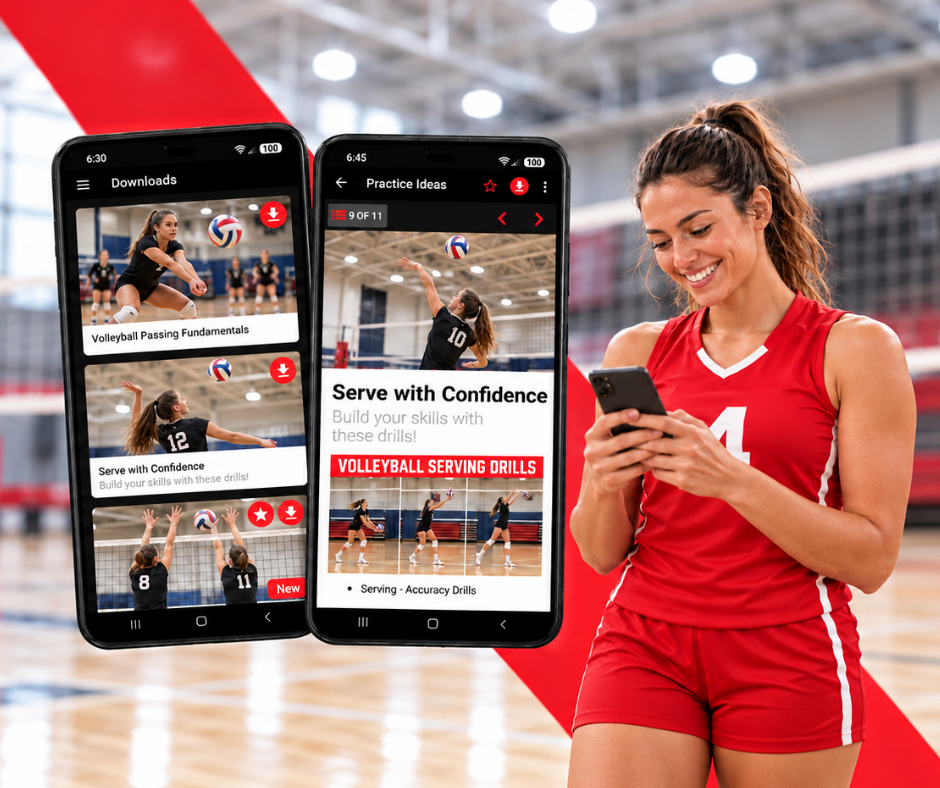
Downloads: Stay Connected to Your Training, Even Offline
A useful article can help you prepare a practice, understand a skill, or even find a different way to approach training. But the moment you want to read it may be the moment your internet connection lets you down. You may discover that the venue has no Wi-Fi or your signal has faded somewhere along the journey.
The Downloads feature in the Ascend app lets you download articles and view them offline. By downloading the content you need while you have an internet connection, you can return to it later, wherever your training takes you.
Prepare Before You Arrive
For coaches, preparation often starts well before a session. You might read an article while planning your practice, then want to revisit it at the venue to refresh your understanding of a technique or coaching approach.
Downloading that article beforehand gives you a reference you can read without relying on the venue’s internet connection. Whether you are reviewing an explanation before your athletes arrive or checking a detail during a break, the information is available when you need it.
This can be particularly helpful when visiting an unfamiliar facility. You may know what equipment to bring and how much time you have, but reliable reception is harder to predict. Making Downloads part of your preparation gives you one less thing to arrange when you get there.
Keep Learning Between Sessions
Athletes can use Downloads to make learning part of the time between practices. An article about a skill you are developing may be easier to absorb when you have a quiet moment to read and reflect.
That moment could happen on the way to training, while travelling to a competition, or during a break in your day. Downloading articles in advance lets you use those opportunities even when you cannot get online.
You can return to an explanation at your own pace, consider how it relates to your training, and bring questions to your next session. Reading becomes more useful when you have time to connect the information with something you have experienced or want to improve.
Choose Content With a Purpose
A helpful place to start is with the articles that support what you are working on now. For a coach, that might be content related to the next practice or a challenge the team is facing. For an athlete, it could be guidance on a technique that needs more attention.
Choosing a few relevant articles makes your offline reading manageable. Instead of trying to work through everything, you can focus on information you are likely to revisit and apply.
As your goals change, take a moment to consider what you will need for the next session or trip. Download those articles while you are connected, and open them before leaving to check that they are ready for offline viewing.
Bring Ideas Into Practice
Access to an article is only the beginning. Its value comes from what you do with the information: a coaching adjustment, a clearer understanding of a movement, or a question that leads to a useful conversation.
Downloads helps keep that connection between reading and training within reach. You can revisit an idea closer to the moment you want to use it, without waiting for a stronger signal.
Before your next practice or trip, download a few articles in the Ascend app. Keep useful training knowledge close, and continue learning wherever you go even if you’re offline.
-
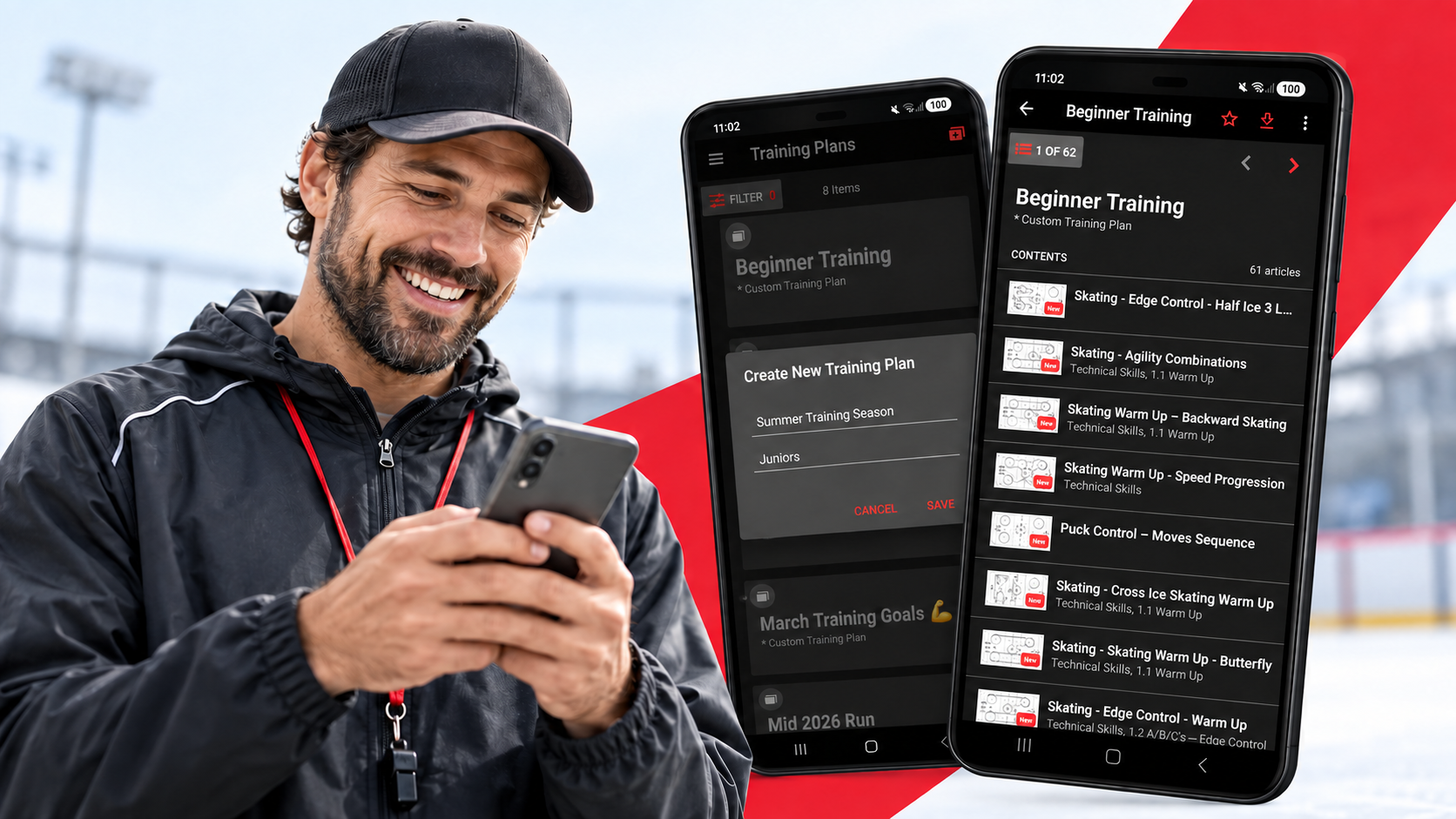
Your Next Practice Starts with a Solid Training Plan
A good practice can look effortless from the sidelines. Athletes move from one activity to the next, instructions are clear, and each drill seems to build on the last. Behind that flow is often a coach who has thought through what the team needs and how to make the most of their time together.
Planning does not mean scripting every minute. It means arriving with a purpose. Maybe your team needs to improve a particular skill, revisit something that proved difficult in the last game, or build confidence before the season begins. A training plan gives those ideas a place to take shape.
Start With One Clear Goal
Before choosing drills, ask yourself what you want athletes to gain from the session. Keep the answer specific enough to guide your choices. “Improve passing” is a start, but “make quicker passing decisions under pressure” gives you a clearer direction.
That goal can help you decide which activities belong in the practice and how they should fit together. You might begin with a simple drill that introduces the skill, then add a more demanding activity that asks athletes to use it in motion or with teammates. By the end of the session, you have a way to see what is improving and what needs more attention.
A plan also helps when you have several priorities competing for practice time. You can choose the most useful focus for today and save other ideas for a future session.
Keep Your Resources Together
Coaches collect useful material from many places: a drill they want to try, a video that explains a technique, or a coaching resource that sparks a new approach. The challenge is finding the right item when it is time to prepare or step onto the field or ice.
In the Ascend app, you can create a Training Plan, give it a name that fits your team or season, and add the drills and coaching resources you want to use. Your selections stay organised in one place, making it easier to review the session before practice and find what you need while coaching.
You might name a plan after a specific goal, such as “Defensive Positioning,” or create one for a group, such as “Junior Team: Week One.” A useful name makes the plan easier to recognise when you return to it.
Make Room to Adapt
Even a thoughtful plan may need to change once practice begins. Athletes might grasp a skill faster than expected, or an activity might reveal that they need more time with the basics. Weather, attendance, available space, and energy levels can also affect what works on the day.
Having a plan gives you a starting point for those decisions. You know what you hoped to accomplish, which drills support that goal, and what you can adjust if the group needs something different. You can spend less time searching through materials and more time watching how your athletes respond.
After practice, take a moment to reflect. Which activity helped the most? Where did athletes struggle? What would you repeat or change next time? Those observations can guide the next Training Plan and help each session build on what came before.
Build Toward Something Bigger
One practice can introduce a skill. A series of practices can give athletes the time and repetition to develop it. Training plans help you connect individual sessions to longer goals, whether you are preparing for a new season, supporting a developing team, or working toward a particular challenge.
They can also make your coaching decisions easier to communicate. When you know the purpose behind each activity, you can explain to athletes what they are working on and why it matters. That sense of direction helps the whole team approach practice with intention.
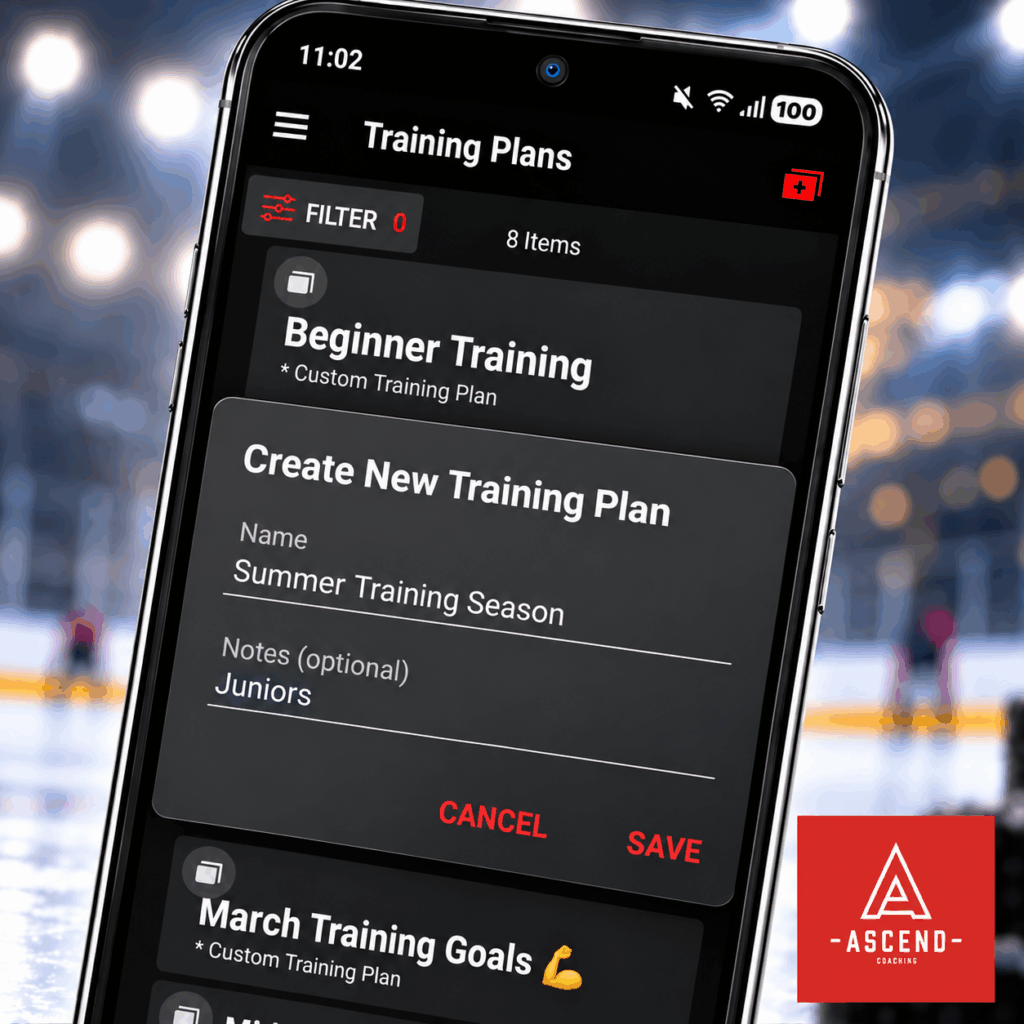
Your next session does not need a complicated plan. Start with one goal, choose a few drills and resources that support it, and give yourself room to respond to the team in front of you.
Open Training Plans in the Ascend app and build your next coaching session. Bring your ideas together, step into practice prepared, and turn your game plan into action.
-
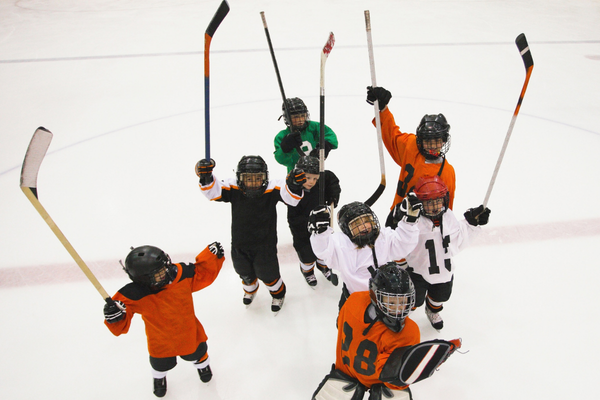
Let Them Try: Why Sampling Different Sports Matters
Choosing a sport can feel like an important decision for a young athlete and their family. With competitive leagues, development programs, scholarships, and professional pathways often receiving attention, there can be pressure to identify the “right” sport as early as possible.
However, young athletes do not always know what suits them after a single season. They may need time to explore different environments, learn new skills, and understand what genuinely excites them. Sampling several sports before specializing gives them the freedom to discover where they feel most motivated, capable, and connected.
Discovering Genuine Interest
A young athlete may initially choose a sport because friends are playing, a family member enjoys it, or a famous athlete has inspired them. These are perfectly good reasons to begin, but they do not necessarily indicate a lasting passion.
Trying different sports allows young athletes to compare experiences. One may enjoy the constant movement and teamwork of soccer, while another may prefer the individual focus of swimming. Some may thrive in fast-paced competition, while others feel more engaged in sports that reward patience, precision, or strategy.
The goal is not to immediately find the sport in which they perform best. It is to notice which activity makes them eager to return. Genuine enthusiasm often appears in simple ways: talking about practice afterward, wanting to improve a skill, or continuing to play without being reminded.
Building a Wider Range of Skills
Different sports develop different physical and mental abilities. Basketball can strengthen coordination, spatial awareness, and quick decision-making. Gymnastics can build balance and body control. Swimming supports endurance, while martial arts may develop concentration, discipline, and confidence.
When young athletes participate in several activities, they build a broader athletic foundation. Skills learned in one sport may also transfer to another. Agility developed through soccer may help on a tennis court, while the timing learned in volleyball may support future success in basketball.
Variety also encourages adaptability. Young athletes learn how to respond to different coaches, teammates, rules, and competitive situations. These experiences can make them more versatile and confident when they eventually decide to focus on one sport.
Reducing Pressure and Burnout
Specializing too soon can sometimes turn an enjoyable activity into an obligation. Repeating the same training schedule throughout the year may lead to mental fatigue, declining motivation, or frustration when progress slows.
Sampling sports gives young athletes room to refresh their interest. A different season introduces new challenges and allows heavily used movement patterns to rest. It can also remind them that sport is not only about rankings, selection, or future opportunities. It is also about play, friendship, curiosity, and personal growth.
Parents and coaches can support this process by asking open questions. Instead of focusing only on scores or results, they might ask:
- What did you enjoy most today?
- What skill would you like to learn next?
- Did you feel comfortable with your coach and teammates?
- Would you choose to play this sport again?
The answers can reveal more than a win-loss record.
Knowing When Specialization Makes Sense
Sampling does not mean avoiding commitment forever. As young athletes mature, some will naturally develop a strong preference. They may begin requesting additional practice, seeking more advanced coaching, or setting personal goals within a particular sport.
At that point, specialization can become a thoughtful next step rather than a decision made for them. Families should consider not only ability, but also motivation, physical readiness, coaching quality, time demands, costs, and the athlete’s overall well-being.
A possible career should be approached as a pathway, not a promise. Professional competition is only one future within sport. Experience can also lead toward coaching, officiating, athletic therapy, sports science, management, media, or community development. The lessons gained through participation remain valuable even when the original goal changes.
Supporting Every Stage with Ascend
As young athletes explore different sports, clear communication and organized development can help them understand their progress. Ascend gives coaches a central place to share training plans, instructional resources, feedback, and team updates. This makes it easier to create structured experiences while adapting support to each athlete’s changing interests and needs.
The right sport is not always the first one a young athlete tries, or even the one in which they win first. Sometimes the most meaningful beginning is simply having the freedom to step onto different fields, courts, tracks, and pools until one of them feels like a place worth returning to.
-
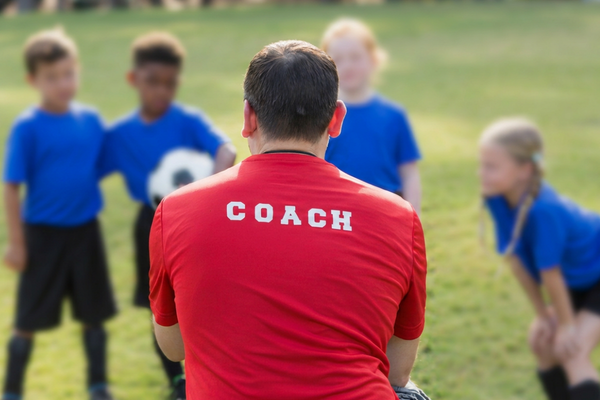
Why Every Athlete Responds Differently to Feedback
Feedback is one of a coach’s most important tools. A well-timed correction can improve technique, strengthen confidence, and help an athlete reach the next stage of development. However, feedback does not affect every athlete in the same way. A direct instruction may motivate one athlete but cause another to become anxious or discouraged.
Effective coaching therefore requires more than knowing what to say. Coaches must also understand how, when, and where to say it.
Why Athletes Process Feedback Differently
An athlete’s response to feedback can be influenced by personality, age, confidence, previous experiences, and preferred ways of learning. Some athletes want detailed explanations and need to understand why a particular adjustment matters. Others learn more effectively by watching a demonstration and immediately trying the movement themselves.
Confidence also plays an important role. A self-assured athlete may be comfortable receiving direct criticism, while an athlete who is already questioning their abilities may hear the same correction as confirmation that they are failing. Stress, fatigue, fear of disappointing others, and pressure to perform can further affect how feedback is received.
Recognizing these differences does not mean labelling athletes or making assumptions about them. It means paying attention to how each individual communicates, learns, and reacts.
Recognizing Different Responses
Athletes often reveal their feedback preferences through their behaviour. One athlete may ask several questions because they need more detail. Another may become quiet while processing the information. Some athletes respond defensively, while others immediately agree but remain unsure about what they are expected to change.
Coaches should avoid interpreting every negative reaction as laziness, disrespect, or lack of commitment. An athlete who looks away may feel embarrassed. An athlete who argues may not understand the instruction. Someone who repeatedly makes the same mistake may need the skill demonstrated differently.
Observation allows coaches to identify what helps each athlete understand and act on feedback.
Adapting the Coaching Approach
The goal of feedback should remain consistent, but the way it is delivered can change.
Analytical athletes may benefit from an explanation of why a correction matters and how it affects performance. Visual learners may respond better to a demonstration, diagram, or video replay. Younger athletes often need short, concrete instructions focused on a single action.
Athletes who lack confidence may need their progress acknowledged before receiving a correction. For example, a coach might say, “Your positioning has improved. On the next attempt, focus on keeping your head up.” This recognizes development while providing a clear next step.
More experienced or highly motivated athletes may prefer direct and challenging feedback. Even then, corrections should remain specific and respectful rather than personal.
Choosing the Right Moment
Timing and setting can determine whether feedback helps or harms. Immediate feedback is often useful when correcting a technical movement during practice. However, emotional or sensitive feedback may be better delivered privately or after the athlete has had time to recover from a difficult performance.
Public feedback can create embarrassment, especially when it focuses on an individual mistake. Coaches should consider whether the athlete will benefit from hearing the correction in front of the team or whether a private conversation would be more productive.
It is also important to avoid overwhelming athletes with too much information. Correcting several things at once can leave an athlete unsure where to begin. One clear adjustment followed by another opportunity to practise is usually more effective.
Making Feedback Actionable
Useful feedback tells an athlete what happened and what to do next. Comments such as “focus,” “do better,” or “try harder” do not provide enough direction.
A coach can make feedback actionable by describing the observation, explaining its effect, and offering one specific adjustment. For example: “Your weight remained on your back foot, which reduced your power. On the next attempt, shift your weight forward as you make contact.”
The coach can then ask the athlete what the movement felt like or invite them to explain the instruction in their own words. This turns feedback into a conversation and helps confirm understanding.
Monitoring Progress Over Time
Feedback becomes more valuable when coaches can see whether it leads to improvement. Keeping a record of observations, training goals, and athlete responses can help coaches identify patterns and decide when their approach needs to change.
A coaching platform such as Ascend can make this process easier by bringing training plans, athlete progress, and coaching resources into one place. Instead of relying entirely on memory, coaches can follow an athlete’s development over time and provide feedback based on a clearer picture of their progress.
Adapting feedback does not mean lowering standards or treating athletes unfairly. It means giving each athlete the communication and support they need to work toward the same expectations.
The most effective coaches do more than correct skills. They learn how their athletes think, communicate, and grow. By listening, observing, and monitoring progress, coaches can make feedback a source of confidence, understanding, and lasting development.
-
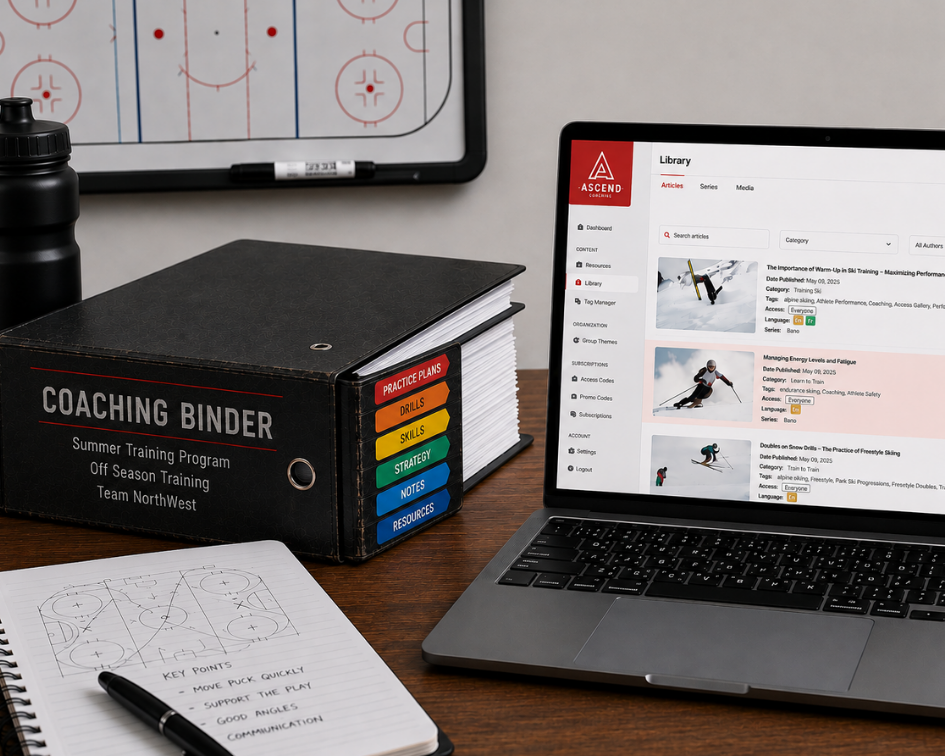
From Coaching Binder to Digital Coaching Library | Part 2 | Bring Your Resources Into the Digital World
How to Digitize Your Coaching Resources
Once you’ve sorted through your coaching binder, the next step is moving your resources into a digital environment.
It can be tempting to simply scan every page or take photos of your binder. But digitizing your coaching resources isn’t just about creating electronic copies of your paperwork.
The goal is to turn your resources into content you can actually find, reuse, and adapt.
1. Start With Your Most-Used Resources
Don’t try to transfer everything at once.
Start with the drills, practice plans, and resources you use most often. This gives you a useful digital library right away while allowing you to gradually transfer older materials.
For example, start with:
- Your top 10 drills
- Your current practice plans
- Your most-used skill activities
- Resources for your current age group
Once those are in place, you can build from there.
2. Don’t Just Photograph the Page
A photo of a paper drill is technically digital, but it doesn’t necessarily make the information easier to use.
When possible, turn your resources into structured digital content.
Instead of uploading a page that says:
Passing Drill
with several paragraphs of instructions, organize the information into sections such as:
Objective: Improve passing accuracy
Skill Level: Intermediate
Duration: 15 minutes
Equipment: Cones and balls
Instructions: Step-by-step activity
Coaching Points: What to watch forNow the resource is easier to understand and can potentially be reused in different practice plans.
3. Use Tags and Categories
One of the biggest advantages of digital resources is that you don’t have to remember exactly where something is stored.
Use tags or categories to describe your resources.
A single drill might be tagged:
Passing | U15 | Intermediate | Skill Development | 15 minutes
That gives you multiple ways to find it later.
If you need a 15-minute activity for an intermediate U15 session, you can search based on those criteria instead of flipping through pages.
4. Turn Practice Plans Into Reusable Resources
Your practice plans don’t have to remain fixed documents.
Look at each plan and identify the individual activities inside it.
A single practice might include:
Warm-Up → Passing Drill → Skill Development → Small-Sided Game
Each activity can become its own reusable resource.
That means you can take the same passing drill and use it in several different practice sessions without recreating it from scratch.
5. Adapt Resources for Different Skill Levels
A good activity may work for beginners, intermediate athletes, and advanced players—but the activity may need to change.
Your digital resources can include variations.
For example:
Beginner: Reduce the distance and simplify the movement.
Intermediate: Add movement and decision-making.
Advanced: Add defenders, speed, or additional constraints.
Instead of maintaining multiple paper copies, you can build variations into your digital resource and adapt it when needed.
6. Build Your Digital Library Gradually
Don’t worry about having a perfect digital library on day one.
Think of it as a collection that grows over time.
Every time you create a new drill, improve a practice plan, or discover a useful activity, add it to your library.
Eventually, you’ll have something much more valuable than a digital copy of your binder: a collection of coaching resources that can be searched, adapted, and reused.
7. Make Your Resources Work Harder
The real benefit of digitizing your coaching resources isn’t simply having fewer papers to carry.
It’s being able to find the right resource when you need it, adapt it for your athletes, and use it again in a different situation.
Once your drills and practice plans are organized digitally, you can start building complete training sessions from those reusable resources.
-

Injury Prevention Starts Before the Game: Building Safer Training Habits
For athletes, injury prevention doesn’t begin when something starts to hurt. It begins long before game day with the habits built into everyday training.
While injuries can never be completely eliminated from sport, athletes and coaches can take meaningful steps to reduce unnecessary risk. A thoughtful approach to warm-ups, mobility, strength, recovery, and training habits can help athletes prepare their bodies for the demands of competition while building greater confidence and consistency along the way.
Start With a Purposeful Warm-Up
A warm-up should be more than a few minutes of light jogging before practice. A well-designed warm-up gradually prepares the body for the movements and intensity ahead.
Dynamic movements such as lunges, leg swings, controlled skips, arm circles, and sport-specific drills can increase body temperature while preparing muscles and joints for activity. Coaches can also use warm-ups as an opportunity to reinforce movement patterns athletes will use during practice or competition.
The goal isn’t simply to “get warm.” It’s to help athletes transition safely from rest to movement.
Build Mobility Into Training
Good mobility allows athletes to move through the ranges of motion required by their sport. When mobility is limited, athletes may compensate by placing additional stress on other areas of the body.
Mobility work doesn’t have to be complicated or time-consuming. Incorporating controlled movements into warm-ups, cooldowns, and regular training can help athletes maintain movement quality. Coaches should focus on movements that are relevant to the athlete’s sport, position, age, and individual needs.
Mobility should support performance not become another task athletes rush through.
Strengthen the Foundation
Strength training is another important part of injury prevention. Developing strength can help athletes better handle the forces, changes of direction, jumps, impacts, and repetitive movements associated with their sport.
A strong training foundation should include more than sport-specific muscles. Exercises that develop the core, hips, legs, shoulders, and other supporting muscle groups can help athletes develop stability and control.
For younger athletes especially, strength training should be age-appropriate and focused on proper technique, movement quality, and gradual progression rather than simply lifting heavier weights.
Recovery Is Training, Too
One of the easiest parts of training to overlook is recovery. Athletes sometimes view rest as lost training time, but recovery is when the body has an opportunity to adapt to the demands placed on it.
Adequate sleep, hydration, nutrition, rest days, and appropriate cooldowns all contribute to recovery. Coaches should also pay attention to signs that an athlete may not be recovering well, including persistent soreness, unusual fatigue, declining performance, changes in mood, or difficulty concentrating.
More training isn’t always better training. The goal is to find the right balance between challenge and recovery.
Create Better Training Habits
Injury prevention ultimately comes down to consistency. Athletes benefit from gradually increasing training demands rather than making sudden changes in intensity, volume, or frequency.
Coaches can help by creating an environment where athletes feel comfortable communicating when something doesn’t feel right. Reporting pain or discomfort shouldn’t be treated as weakness. Early communication can give coaches and appropriate health professionals an opportunity to address potential problems before they become more serious.
The safest athletes aren’t necessarily those who avoid challenging training. They’re athletes who prepare intelligently, listen to their bodies, and understand that long-term development matters more than a single practice or competition.
Build Injury Prevention Into the Plan
Creating safer training habits is easier when preparation, training, and recovery are part of a consistent plan. Tools like Ascend can help coaches organize training resources and build structured development plans that keep athletes progressing with purpose.
Because injury prevention isn’t a single drill or a one-time conversation. It’s a coaching mindset built into every practice, every training plan, and every step of an athlete’s development.
Prepare well, train smart, and recover intentionally.
-

Helping Young Athletes Stay Motivated When Progress Feels Slow
For young athletes, progress can sometimes feel frustratingly slow. They may practice the same skill for weeks without seeing a dramatic improvement, lose a game they worked hard to prepare for, or watch teammates advance faster than they do. When results don’t match their effort, it’s easy for young athletes to wonder, “Am I actually getting better?”
Coaches play an important role in helping athletes understand that development isn’t always obvious. Progress often happens gradually, through small improvements that may not show up on a scoreboard.
Guide Athletes to Look Beyond the Results
Wins, scores, rankings, and statistics can be useful measures of performance, but they don’t tell the whole story—especially for developing athletes.
A young player may not score more goals yet, but they might be making better decisions, communicating more effectively, recovering faster after mistakes, or showing greater confidence during practice.
Coaches can help athletes recognize these changes by asking questions such as:
- What can you do now that you couldn’t do before?
- What felt easier in today’s practice?
- What did you learn from that game?
- What is one thing you’d like to improve next?
These conversations shift the focus from immediate results to continuous development.
Celebrate the Small Wins
When progress feels slow, small victories become especially important.
Successfully completing a difficult drill, improving technique, staying focused through a challenging practice, or trying something new can all be meaningful signs of growth. Recognizing these moments helps young athletes see that their effort is producing results even if those results aren’t appearing on the scoreboard yet.
Coaches and parents can reinforce this mindset by noticing and celebrating these small wins both during training and outside of competition. When young athletes hear consistent encouragement from the adults supporting them, they are more likely to recognize their own progress and stay motivated when improvement takes time.
Celebrating small wins doesn’t mean lowering expectations. Instead, it helps athletes understand that big improvements are often built from many smaller ones.
Teach Athletes That Development Isn’t Linear
Young athletes can easily compare themselves to teammates or opponents who appear to be improving faster. Coaches can remind them that every athlete develops at a different pace.
Some periods may bring rapid improvement, while others may feel like a plateau. A plateau doesn’t necessarily mean an athlete has stopped progressing. Sometimes skills are being reinforced before they become more consistent or automatic.
Teaching athletes to expect these ups and downs can help them stay patient when progress isn’t immediately visible.
Set Process-Based Goals
Outcome goals, such as winning a tournament or scoring a certain number of points, can be motivating, but young athletes also benefit from goals they can directly control.
Instead of focusing only on winning, coaches can encourage goals such as improving passing accuracy, communicating with teammates, maintaining proper technique, or making better decisions under pressure.
Process-based goals give athletes something constructive to work toward during every practice and competition. They also make improvement easier to recognize.
Make Effort Part of the Conversation
Determination isn’t simply about working harder. For young athletes, it’s about learning how to respond when something is difficult.
Coaches can reinforce qualities such as persistence, focus, curiosity, and willingness to learn. Praising these behaviors helps athletes understand that struggling with a skill doesn’t mean they’re failing, it means they’re still learning.
Over time, this mindset can help young athletes become more comfortable with challenges and more confident in their ability to improve.
Knowing When to Trust the Process
Young athletes don’t always need to see immediate results to know they’re moving forward. They need coaches who can help them recognize the progress happening along the way.
By looking beyond scores, celebrating small improvements, setting achievable process goals, and normalizing periods of slower development, coaches can help young athletes stay motivated and committed to their journey.
Every athlete develops at a different pace. The goal isn’t to rush progress, it’s to create an environment where athletes can keep working, learning, and growing.
Help Every Athlete Keep Moving Forward
Ascend gives coaches the tools to create structured, development-focused training experiences that help athletes build skills over time. With training plans, drills, video coaching, and resources designed to support athlete development, coaches can make progress more visible and keep young athletes engaged throughout their journey.
The most important thing young athletes can learn is that progress is not always something they can see right away. Every practice, challenge, mistake, and small breakthrough contributes to their development. When coaches help athletes appreciate those moments, they begin to understand that improvement isn’t about becoming better overnight. It’s about continuing to show up, learn, and take the next step. With patience and encouragement, slow progress can become a powerful lesson in determination.
-
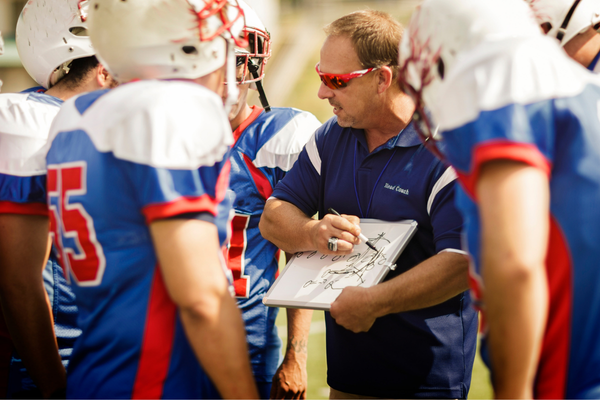
Experience Builds Knowledge, Confidence Builds Influence: Great Coaches Need Both
If you’ve spent any time around sports, you’ve probably met both kinds of coaches.
The first is the veteran who has spent decades on the sidelines. They know the game inside and out, can diagnose problems before they emerge, and carry a library of lessons earned through years of experience. The second is the younger coach who may have fewer seasons behind them but commands a room with clarity, conviction, and energy. We see this clearly when athletes listen to them when they speak and parents simply trust their direction, and the whole team respond to their leadership.
We often assume these qualities naturally come together and that experience produces confidence and confidence reflects experience. In reality, the relationship is far more complicated.
Some coaches accumulate years of knowledge yet remain hesitant to trust their own judgment. Others possess remarkable confidence despite having limited practical experience. Both can be effective in certain situations, but neither represents the complete picture of great coaching.
The coaches who leave the greatest impact are rarely defined by one quality alone. They pair deep knowledge with decisive leadership. They continue learning while projecting confidence. They understand that athletes need more than technical instruction. They need someone capable of translating expertise into belief.
Great coaching emerges from the intersection of experience and confidence, where hard-earned knowledge is matched by the ability to lead decisively, communicate clearly, and inspire others to grow.
The Value of Experience
Experience is one of the most respected qualities in coaching. It is earned through years of practices, competitions, victories, setbacks, and countless interactions with athletes.
Experienced coaches have seen patterns emerge over time. They recognize what motivates different athletes, understand how to adapt training plans when challenges arise, and know how to navigate difficult situations under pressure.
With experience comes perspective. Coaches learn that development is rarely linear, that every athlete responds differently, and that success often requires patience and consistency.
This accumulated knowledge allows coaches to make better decisions and create more effective learning environments. However, experience alone does not automatically translate into impact.
Why Confidence Matters
A coach may possess years of experience and extensive technical knowledge, but if they lack confidence in their leadership, their influence can be limited.
Athletes look to coaches for guidance, direction, and reassurance. They want to know that the person leading them believes in the plan, believes in their development, and can help them overcome challenges.
Confidence allows coaches to communicate clearly, make decisions decisively, and maintain composure during difficult moments.
Importantly, coaching confidence is not about arrogance or believing you have all the answers. Instead, it is the willingness to trust your preparation, apply your knowledge, and lead with conviction even when outcomes are uncertain.
Confident coaches create confidence in others.
When athletes see calm, focused leadership, they are more likely to trust the process, embrace challenges, and perform at their best.
The Risk of Imbalance
Problems can arise when experience and confidence are out of balance.
A highly confident coach with limited experience may make decisions without fully understanding the consequences. While enthusiasm and self-belief are valuable, they must be supported by ongoing learning and development.
On the other hand, experienced coaches can sometimes struggle with self-doubt. Despite years of expertise, they may hesitate to implement new ideas, question their instincts, or underestimate the value they bring to their athletes.
The most effective coaches continue to strengthen both areas simultaneously. They remain students of the game while also developing the confidence to lead, communicate, and innovate.
Building Confidence Through Preparation
One of the best ways to develop coaching confidence is through preparation. Confidence grows when coaches know they have the resources, knowledge, and tools needed to support their athletes. Access to quality training materials, proven coaching practices, and professional development opportunities helps coaches feel more equipped to handle challenges as they arise.
Preparation reduces uncertainty. It allows coaches to spend less time searching for answers and more time focusing on athlete development. This is particularly important in today’s coaching environment, where information is constantly evolving and athletes expect engaging, modern learning experiences.
Great Coaches Never Stop Learning
The strongest coaches understand that confidence and experience are not destinations. They are ongoing processes.
Every season presents new opportunities to learn and every athlete brings a unique perspective. By embracing continuous development, coaches can expand their knowledge while strengthening their confidence to lead effectively. The result is a coaching approach that combines expertise with influence, creating a positive environment where athletes can grow, learn, and succeed.
Elevate Your Coaching with Ascend
At Ascend, we believe that great coaching starts with great resources.
Our digital coaching platform helps organizations transform coaching knowledge into accessible, engaging learning experiences that support coaches at every stage of their journey. From structured learning pathways and training plans to instructional content and athlete development resources, Ascend empowers coaches to build both the experience and confidence needed to make a lasting impact.
Whether you’re supporting new coaches or experienced leaders, Ascend provides the tools to help your coaching community learn, grow, and lead with confidence.
Beyond Wins and Experience
Coaching is often measured in wins, championships, and years spent on the sidelines, but those markers tell only part of the story. The coaches who leave the deepest impression on athletes are rarely remembered solely for what they knew. They are remembered for how they led, how they communicated, and how they helped others believe in what was possible. Experience may provide the lessons, but confidence gives those lessons the power to shape people. And in the end, great coaching depends not on choosing one over the other, but on developing both.
-
Skills Before Scoreboards: Why Long-Term Development Matters More Than Early Wins
On the final day of the season, the gym was filled with cheers as medals were handed out and a championship trophy was lifted into the air. Cameras flashed, families applauded, and teammates celebrated a season to remember.
A few feet away stood another team. They hadn’t won the championship. There were no medals around their necks and no trophy to carry home, yet something remarkable had happened over the past few months.
The young athlete who couldn’t catch a pass in the first week was now confidently making plays during games. The quiet player who rarely spoke had become one of the team’s strongest communicators. Another athlete, once discouraged by mistakes, had learned to shake them off and keep competing. No trophy recognized those achievements, but they were victories all the same.
In youth sports, it’s easy to believe that success is measured by the final score. Standings, medals, and championships naturally capture our attention because they’re easy to see. What often goes unnoticed are the countless small moments of growth that happen during every practice.
The truth is, very few athletes remember every game they won when they were ten years old. What they often remember instead is the coach who believed in them, the teammate who encouraged them, and the feeling of finally accomplishing something they once thought was impossible. That’s because skills stay with athletes long after trophies are packed away.
Strong Fundamentals Create Better Athletes
Every great athlete begins with the basics.
Whether it’s passing in soccer, shooting in basketball, skating in hockey, or proper body positioning in gymnastics, mastering the fundamentals creates confidence that carries into more advanced skills later on.
Skipping these essential steps in pursuit of quick victories may produce short-term success, but it can limit an athlete’s growth over time. Athletes with strong fundamentals adapt more easily, learn faster, and perform more consistently as competition becomes more challenging.
Coaches who emphasize skill development help prepare athletes not just for the next game, but for the next stage of their sporting journey.
Confidence Comes From Progress
One of the greatest rewards in youth sports is seeing athletes recognize their own improvement.
The first successful pass under pressure, the first time mastering a difficult movement, or the first practice where a new technique finally clicks, these moments often mean more than a medal because they represent personal growth.
When athletes see themselves improving, confidence grows naturally. Instead of fearing mistakes, they begin to see challenges as opportunities to learn.
This mindset creates resilient athletes who are motivated by progress rather than perfection.
Every Athlete Develops at Their Own Pace
It’s natural to compare athletes, especially during competitive seasons. However, development isn’t a race.
Some athletes experience rapid physical growth early, while others develop later. Some pick up technical skills quickly, while others excel because of determination and consistent practice.
The athlete who isn’t the strongest or fastest today may become the most well-rounded competitor in a few years because they developed strong habits, discipline, and a willingness to keep learning.
Coaches and parents play an important role in recognizing effort and improvement, not just outcomes.
Success Looks Different for Every Athlete
Not every young athlete will compete at an elite level, and that’s perfectly okay.
Sport teaches valuable life skills that extend well beyond the field, court, rink, or track. Discipline, resilience, communication, leadership, and teamwork become lifelong strengths regardless of whether an athlete earns a college scholarship or simply continues playing recreationally.
When success is measured by growth instead of trophies alone, every athlete has the opportunity to succeed.
Coaching for Long-Term Development
Great coaches understand that today’s practice shapes tomorrow’s athlete. Creating engaging training sessions, introducing age-appropriate progressions, and encouraging continuous improvement, coaches help athletes build skills that last long after the final whistle.
Having organized practice plans and easy access to quality coaching resources also makes it easier to focus on athlete development rather than administrative tasks. Digital coaching platforms like the Ascend Sports Coaching app support this process by helping coaches organize drills, training plans, and learning resources in one place, allowing more time to develop confident, capable athletes.
At the end of the season, trophies may gather dust on a shelf, but the skills, confidence, and love of sport that athletes develop can stay with them for a lifetime. By putting skills before trophies, coaches and parents help create not only better athletes, but stronger, more resilient people.